
Why Patients With Vision Loss May Struggle in Dim or Uneven Lighting

Vision loss can affect much more than the ability to read small print. Many patients also experience reduced contrast sensitivity, making it difficult to distinguish objects, faces, steps, or changes in flooring when lighting is dim or uneven.
At Beacon Vision Center, we help patients understand how contrast loss and changing light conditions can affect everyday safety and independence. Even when a room is not completely dark, shadows, glare, and inconsistent lighting may make familiar tasks more challenging.
How Contrast Loss Affects Everyday Vision
Contrast sensitivity is the ability to distinguish an object from its background. A person with reduced contrast sensitivity may have trouble seeing a gray curb against concrete, dark clothing on a dark chair, or facial features in a poorly lit room.
Standard visual acuity testing does not always reveal the full impact of contrast loss. Someone may still recognize high-contrast black letters on a white chart while struggling with real-world environments where colors, shadows, and surfaces blend together. Contrast sensitivity is an important part of functional vision and can influence reading, mobility, driving, and facial recognition.
Why Dim Lighting Creates Additional Challenges
When lighting is limited, there is less contrast between objects and their surroundings. Patients with low vision may need more illumination to identify details that others can see easily.
Dim lighting can make it harder to:
• Read menus, medication labels, or printed instructions
• Recognize steps, curbs, rugs, and changes in flooring
• Locate objects inside cabinets or closets
• Identify faces across a room
• Move safely through hallways, restaurants, or parking areas
These challenges may become more noticeable when a person has a retinal condition, optic nerve damage, reduced peripheral vision, or another form of permanent vision impairment.
Uneven Lighting Can Hide Important Details
Uneven lighting occurs when one area is brightly illuminated while another remains dark or shadowed. Examples include entering a dim restaurant from a bright lobby, walking through a hallway with scattered overhead lights, or moving between rooms with different light levels.
Patients with vision loss may take longer to adapt to these changes. Shadows can also be mistaken for holes, steps, or objects, while actual hazards may blend into the floor. Bright light sources within an otherwise dark space may create glare that further reduces useful contrast.
Low Vision Rehabilitation and Vision Enhancement Technology
Low vision rehabilitation helps patients make better use of their remaining vision through personalized strategies, adaptive techniques, and specialized visual aids. For someone who struggles in dim or uneven lighting, rehabilitation may include guidance on task lighting, glare control, contrast enhancement, and safer ways to complete daily activities.
Vision enhancement technology can provide additional support based on each patient’s goals. Portable magnifiers, telescopic lenses, electronic video magnifiers, CCTV systems, customized low vision glasses, and assistive mobile apps may improve access to printed materials, faces, signs, and other important details. At Beacon Vision Center, we evaluate each patient’s functional vision and recommend devices that fit the specific tasks they want to perform more confidently.
A Low Vision Evaluation Looks Beyond the Eye Chart
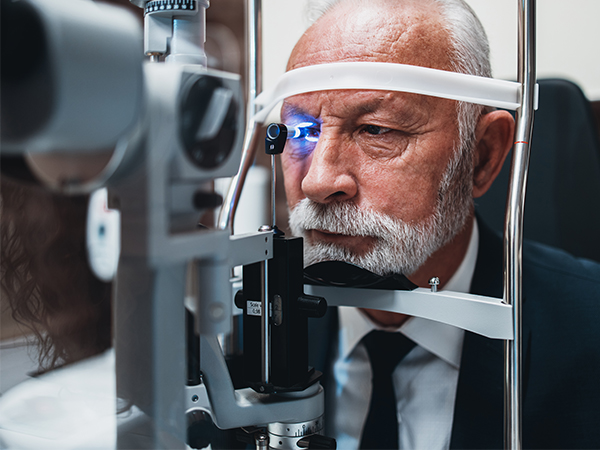
A low vision evaluation considers how vision loss affects the specific activities a patient wants or needs to perform. We can assess functional concerns such as contrast sensitivity, lighting needs, reading ability, glare, and mobility. Based on those findings, we may recommend customized visual aids, environmental changes, or low vision rehabilitation strategies designed to help patients use their remaining vision more effectively.
Schedule a low vision evaluation with Beacon Vision Center to explore personalized rehabilitation strategies and vision enhancement technology that can help you use your remaining vision more effectively. Contact our office in Farmers Branch, TX, by calling (214) 420-5090 to book an appointment.
All Eye
Care Services

Keep
In Touch

Contact Info
Hours of Operation
- Monday 8:00am - 5:00pm
- Tuesday 8:00am - 5:00pm
- Wednesday 8:00am - 5:00pm
- Thursday 8:00am - 5:00pm
- Friday 8:00am - 5:00pm
- Saturday Closed
- Sunday Closed
© 2026 Beacon Vision Center, PLLC. All rights Reserved. Accessibility Statement - Privacy Policy - Sitemap
Powered by:
